59 Welby Street, Grantham, Lincolnshire, NG31 6EA
Free measuring and quoting, no obligation
01476 593199

Laminate flooring in Grantham, supplied and fitted

It has one clear limitation, and we'd rather tell you about it before you buy than after. The core is wood-based, so it doesn't belong in a properly wet room.

Est. 1993, over 30 years in the trade Measured and fitted by our own team

Laminate gets a slightly unfair reputation, usually from people remembering the thin, shiny stuff that was everywhere twenty years ago. Modern laminate is a different product. It's tough, it resists scratching better than most floors including real wood, and it costs considerably less than the timber it imitates.

Where laminate works, and where it doesn't

Suitability
Rule 1

Works well in

lounges, dining rooms, bedrooms, studies, and hallways if you go for a higher AC rating.

Rule 2

Doesn't belong in

bathrooms, wet rooms, or anywhere water sits. Some laminates are sold as water-resistant, and they are better than they used to be, but water-resistant is not waterproof. The core is still wood fibre, and if water gets into a joint and stays there, it swells. Swollen laminate cannot be repaired, only replaced.

Rule 3

Think carefully about

kitchens. A careful household can get away with it. A household where the dishwasher door gets left open and the dog knocks the water bowl over should be looking at LVT instead.

Compare with LVT →

Where laminate works, and where it doesn't
Ratings

AC ratings, and why they matter more than the price

Laminate is rated for abrasion resistance on an AC scale.

AC1 to AC2 is light domestic. Bedrooms, or a room that barely gets used.

AC3 is general domestic. Lounges, dining rooms, hallways. This is where most household laminate sits.

AC4 and AC5 are commercial grades. More than a house needs, though worth considering for a hallway in a busy family home or a rental.

The rating tells you far more about how the floor will look in five years than the thickness does. If you're comparing two laminates at a similar price, compare the AC rating.

Book a Free Measure
AC ratings, and why they matter more than the price
Getting it right

Underlay and expansion, the two things that go wrong

Underlay. Laminate needs it. It smooths out small imperfections in the subfloor, it insulates, and it makes a real difference to the hollow, clicky sound that laminate is known for. A good acoustic underlay is the single biggest improvement you can make to how laminate feels to live with, and it's especially worth it upstairs.

Expansion gaps. Laminate is a floating floor and it moves with temperature and humidity. It needs a gap around the whole perimeter, hidden under the skirting or beadings, so it has somewhere to go. Fitted tight to the wall, it has nowhere, and it lifts in the middle of the room. That's the most common laminate failure we get called out to, and it's always a fitting fault rather than a product fault.

Doorways need expansion joints too, which is why you see a threshold strip between rooms rather than one continuous run through a whole house.

Book a Free Measure
Underlay and expansion, the two things that go wrong
Heating

Laminate with underfloor heating

Most modern laminate is compatible, but not all of it, so it has to be checked against the specific product.

The floor surface temperature needs to stay within the manufacturer's limit, usually around 27°C. Going above it can warp the boards and will normally void the warranty. The underlay needs to be a low-tog type intended for underfloor heating, or you're heating the underlay rather than the room.

Tell us when we measure and we'll make sure what you pick is suitable.

Book a Free Measure
Laminate with underfloor heating
The basics

What laminate is

A high-density fibreboard core, a printed decorative layer on top, and a clear melamine wear layer over that. It clicks together and floats over an underlay rather than being glued or nailed down.

The wear layer is the part that does the work. It's genuinely hard, and it's why laminate stands up to scratching from claws, grit and furniture better than a lot of more expensive floors.

Day to day

Living with it

Sweep or vacuum with the beater bar off. Mop damp, never wet, and mop up spills promptly rather than leaving them to sit at a joint.

Felt pads under furniture legs. Grit under a chair leg is what scratches a wear layer.

Don't use steam mops. The heat and moisture together are the fastest way to ruin a laminate floor, whatever the mop's packaging claims.

What we stock

What we stock in the showroom

Samples on a screen are a guess. Samples in your hand, in daylight, are a decision. The showroom's on Welby Street, with free street parking nearby.

Our work

Recent work, in real houses

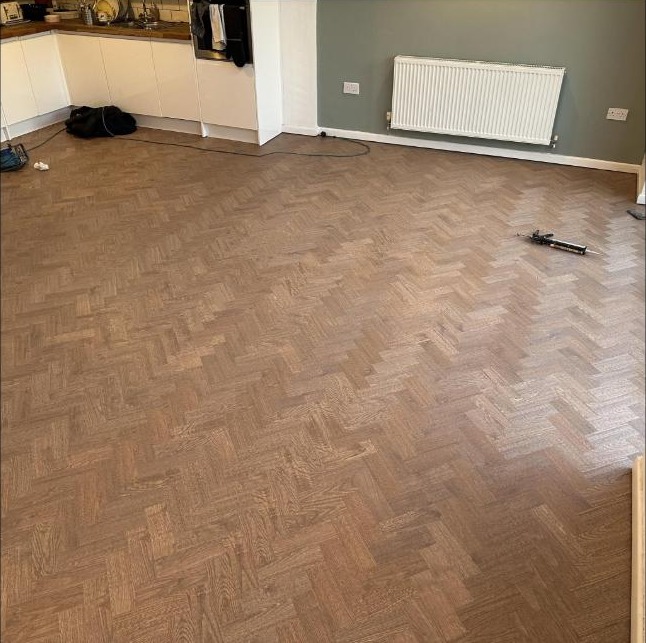
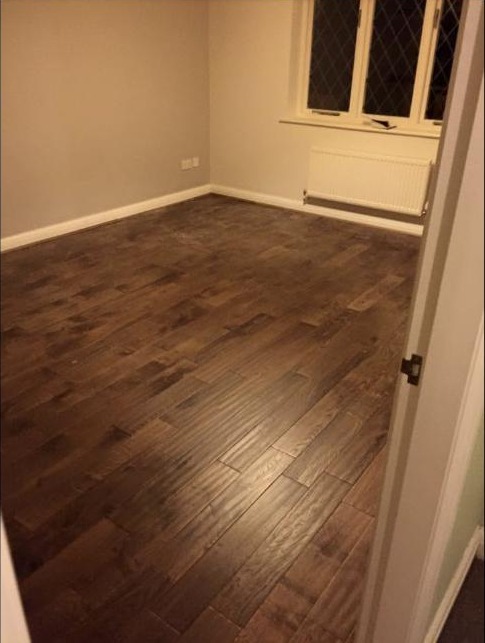
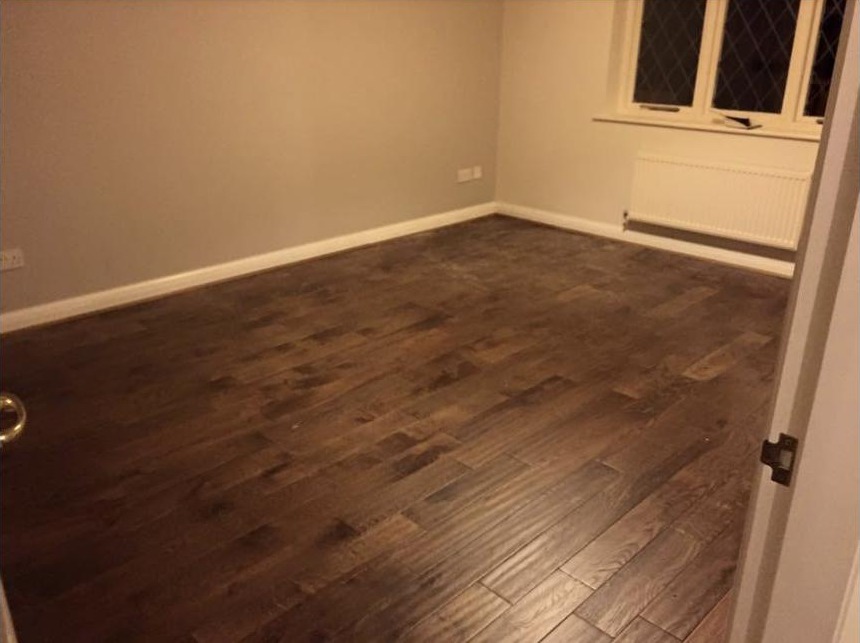
Every floor in this gallery is one of ours, laid in a real house, usually somewhere in or around Grantham. No stock photos, no show homes.

See All Our Work →
FAQ

Fast answers for busy households

The things people ring us to ask, answered plainly. If yours isn't here, call 01476 593199.

Is laminate flooring waterproof?

No. Some laminates are water-resistant, which means they'll handle a spill wiped up promptly, but the core is wood-based and standing water at a joint will eventually swell it. For bathrooms and wet areas, LVT or sheet vinyl is the right answer.

Is laminate or LVT better?

Depends on the room. Laminate costs less and has a rigid, substantial feel that some people prefer. LVT is waterproof, quieter underfoot, and better over underfloor heating. In a dry lounge, laminate is often the better value. In a kitchen or bathroom, LVT.

Do I need underlay for laminate?

Yes. It smooths out the subfloor, insulates, and takes the edge off the hollow sound. Some laminates come with a thin underlay attached, but a separate acoustic underlay usually gives a noticeably better result, particularly upstairs.

Why is my laminate lifting?

Almost always because it wasn't given enough expansion gap around the perimeter. A floating floor expands, and if it can't move outwards at the edges it moves upwards in the middle. It's a fitting fault and it's avoidable.

Can laminate go over underfloor heating?

Usually, but check the specific product. Keep the surface temperature within the manufacturer's limit, generally around 27°C, and use a low-tog underlay designed for the purpose.

Can you lay laminate over existing floorboards?

Yes, provided they're sound and reasonably level. Loose or springy boards need screwing down first, because movement underneath will eventually work the joints apart.

How long does laminate last?

A decent AC3 laminate in a normal domestic room should give you many years. The AC rating matters more than anything else for how it ages, and grit is the main enemy.

Can I fit laminate myself?

Of all the floors we sell, this is the most realistic DIY job. Click systems are designed for it. The things people get wrong are the expansion gap, the underlay, and cutting neatly around door frames. If you do it yourself, undercut the architraves rather than trying to scribe around them.

Get started

Ready for a floor that lasts?

Get a free laminate quote. We'll come out, measure properly, bring samples if you want them, and give you a written quote. Free, and no obligation.

Laminate Flooring fitted by Welby St. Carpets
Call 01476 593199